Legal Blah-blah

Healing approaches mentioned in this blog are for educational purposes only. Suggested supplements, etc. should not be used as replacements for conventional medical treatment without guidance from a licensed and trained medical professional.

Showing posts with label immune system. Show all posts

Thursday, September 17, 2015

Bone Broth


Bone broth is a nutrient rich broth you can make at home with your table scraps! It provides easily absorbed calcium, phosphorus, magnesium and potassium. Bone broth also contains amino acids, glucosamine and collagen.  Bone broth can help you heal from infections more easily, It may help heal leaky gut, decrease joint pain, prevent bone loss and help you have healthy skin, hair and nails.
 
Bone broth

Use organic bones and produce as much as possible.
  • 4 quarts water
  • 1 teaspoon salt
  • 2 tablespoons apple cider vinegar
  • 2 large onions, unpeeled and coarsely chopped
  • 2 carrots, scrubbed and coarsely chopped
  • 3 celery stalks, coarsely chopped
  • 1 bunch fresh parsley
  • Any vegetable skins or peelings you have on hand
  • 2-3 garlic cloves, lightly smashed
  • 2-4 lbs. meat or poultry bones, these may be roasted before if you wish a richer taste
You will notice I did not have parsley or celery and was still able to make this broth!


Place all ingredients in a large slow cooker set on high. Bring to a boil, then reduce the setting to low for 24-48 hours. The longer it cooks, the better it tastes.

After 12 hours cooking.
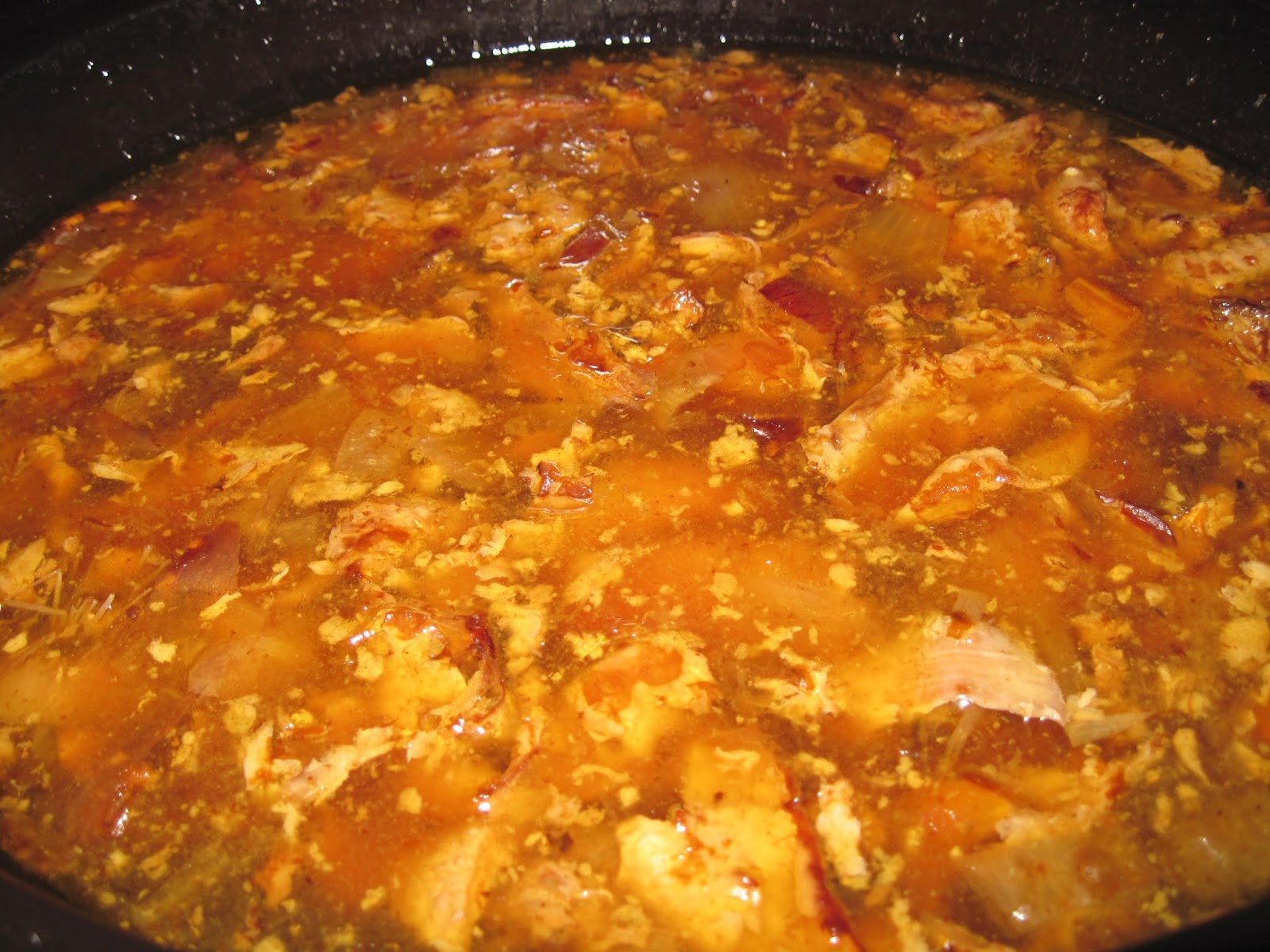

After 24 hours cooking.

 Strain the stock through a fine mesh strainer or coffee filter into a large bowl, and discard the waste. What bones are left will be very brittle.  My chicken carcass had usable meat, so I took that out of the discarded stuff.


Finished strained bone broth.


 Use the broth in homemade soups or other recipes. Even if you don’t have a slow-cooker you can still reproduce this recipe on a stove top, with a large pot on low heat or in the oven.  You can keep the broth in the fridge 3-4 days or in the freezer for up to a year.


Monday, March 7, 2011

Supporting Your Thyroid

I hate to tell you this, but, by the time thyroid issues show up on blood tests, it may be too late to treat it only nutritionally or with lifestyle changes.  You may be on a thyroid hormone prescription for the rest of your life.
That being said, I am a naturopathic physician and I like to treat the whole person.  There are many varieties of thyroid hormone issues.  According to the book by Datis Kharrazian, “Why Do I Still Have Thyroid Symptoms”, there are six types of hypothyroidism with only one needing just the prescription thyroid hormone.
It is usually a woman that enters my office with thyroid problems.  If possible, besides testing TSH, Free T4, Free T3 and antibodies, I also test estradiol, progesterone, DHEA, testosterone and cortisol throughout the day.  We usually have a talk about stress levels, and anti-inflammatory and hypo allergenic foods, which usually means gluten, dairy and citrus free diets.  Depending on the results of testing, history taking and ability of patient to afford supplements, the patient and I come up with a treatment plan that is individually theirs.
I may prescribe bio-identical hormones, things that help increase or decrease cortisol, mid-day naps, funny movies, body work, liver detoxification and supplements.
Here’s where I give you the legal talk:  Healing approaches mentioned in this blog are for educational purposes only.  They should not be used as replacements for conventional medical treatment without guidance from a trained medical professional.
The supplement I recommend to most patients, besides a good multi vitamin/mineral, is fish oil.  It is a great anti-inflammatory, is good for brain function and mental health, and is good for heart health.
The second most recommended supplement to patients that live in the Pacific Northwest is Vitamin D3.  We don’t get enough of it, even in the summer.  It helps with thyroid, depression, the immune system and myriad other conditions.  It’s important to get a blood level check so that you don’t over do it.
Although Kharrazian doesn’t recommend it, I often will give iodine and tyrosine to my thyroid patients if an iodine patch is absorbed quickly (less than 12 hours) through the skin.  Kharrazian believes that iodine can start auto-immune problems.  I personally haven’t seen this in my patients, but I probably will tell my Hashimoto’s patients to not take these type of supplements.  This would include kelp and other sea vegetables.
If you have elevated cortisol, I usually recommend deep breathing and phosphatidyl serine.  If you have low cortisol I recommend Isocort, B vitamins, zinc and selenium.
If you have heart burn, abdominal bloating,  or bowel issues, we will talk about your diet, try digestive enzymes, probiotics and sometimes liver support.
Datis Kharrazian’s book,  “Why Do I Still Have Thyroid Symptoms”, has some new ideas for me.  He tests for immunological markers such as interferon, interleukin, TNF and so on to determine if one part of your immune system is more active than the other and then supplementing to restore balance to the immune system based on the results.  I will probably order some of these tests for patients that are not doing well on what we have been doing so far.
What I’m trying to get at is that there is no “ONE WAY” of treating thyroid issues.  The treatment is wrapped up in what else is going on with the WHOLE person.  Is the person stressed out, having digestive issues?  That will be one treatment.  Is the person diabetic or anemic?  Those are other treatments.  Is the person menopausal?  A combination of everything above?  The treatment plan will take into account what is going on with the individual.
Don’t be disappointed.  In future posts I plan to talk about diabetes, digestive issues and more.  You’ll get to hear about all sorts of supplements for specific issues along with lifestyle changes.  Do you have anything specific you would like to hear about?